Presentation & workshop 2026-10-01

The workshop,
at your own pace.

Read the slides below. Follow the links. Take your time.
Or open the presentation to step through each scene.

The interactive presentation, with the exercises, works best on a computer.

Workshop draft. Content and delivery are still being reviewed.

01ReadZen

Play this slide ↗

Sinologisches Seminar · Universität Zürich · 1 October 2026

ReadZen

An open working environment for the digital study of classical Chinese Zen texts?

Fabulu

ReadZen: an open working environment for the digital study of classical Chinese Zen texts? Fabulu, Sinologisches Seminar, Universität Zürich, 1 October 2026.

02Bodhidharma and Emperor Wu

Play this slide ↗

Cold open · Blue Cliff Record, case 1

What could “knowing” mean here?

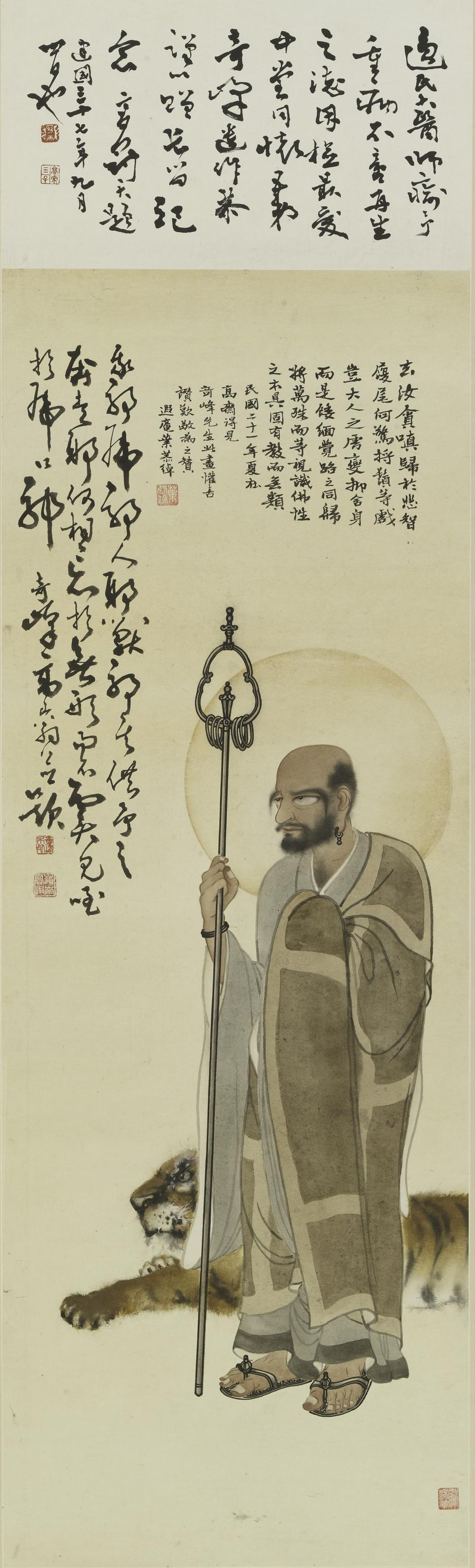
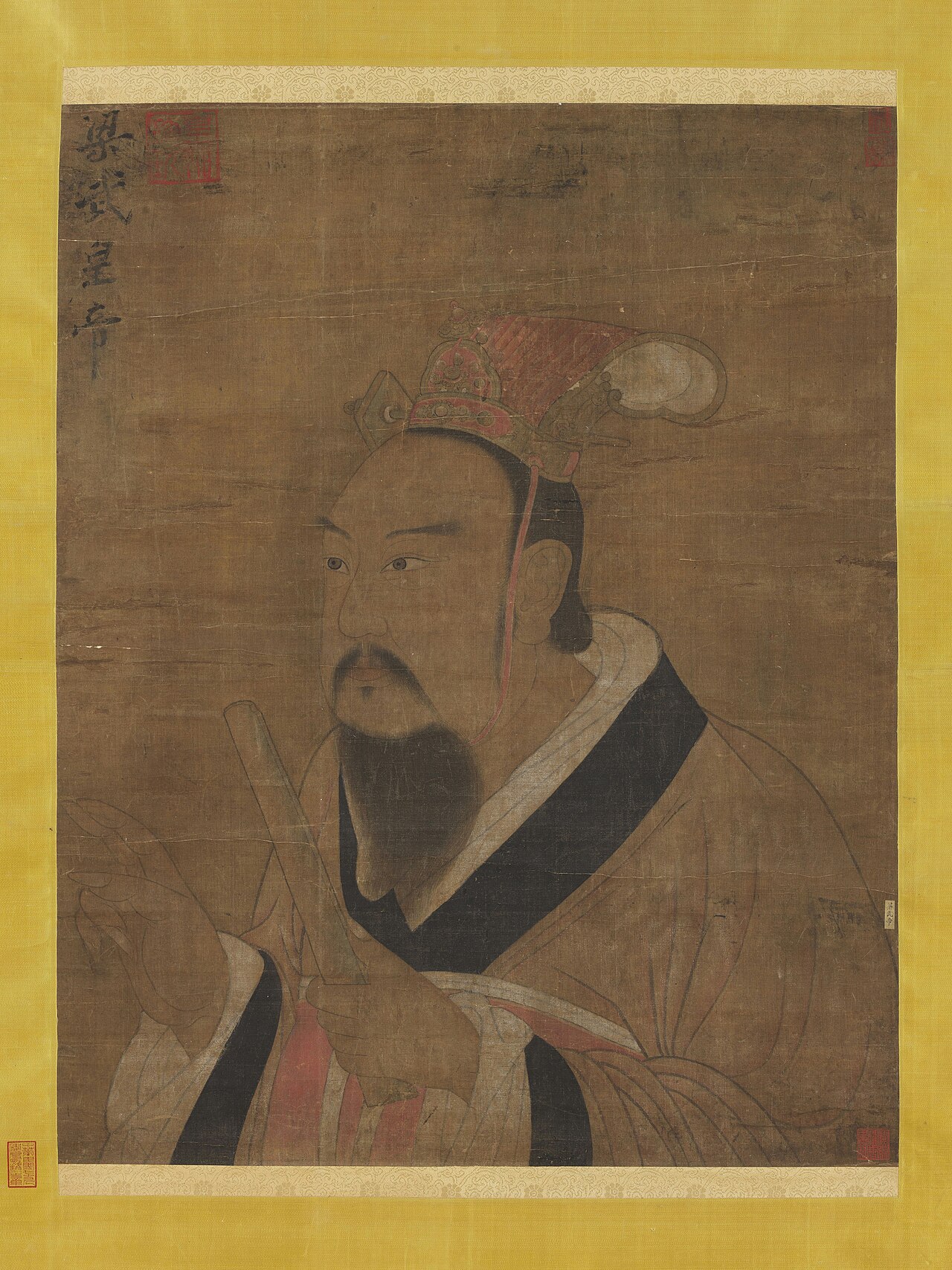
Detail of a twentieth-century ink-and-colour hanging scroll by Gao Qifeng showing Bodhidharma, bald and bearded, with a ring earring and a haloBodhidharma Detail of a painted half-length portrait traditionally identified as Emperor Wu of Liang, wearing a red crownEmperor Wu of Liang
  1. 梁武帝 · Emperor Wu

    梁武帝問達磨大師:「如何是聖諦第一義?」

    “What is the highest meaning of the holy truths?”
  2. 達磨 · Bodhidharma

    磨云:「廓然無聖。」

    “Vast emptiness—nothing holy.”
  3. 梁武帝 · Emperor Wu

    帝曰:「對朕者誰?」

    “Who is facing me?”
  4. 達磨 · Bodhidharma

    磨云:「不識。」

    “I do not know.”
Blue Cliff Record T48n2003 · 0140a17–0140a20
Today’s question

How do we find this passage again, and read it in the original?

Source and translation note. The Chinese follows the core exchange in CBETA’s digital transcription of the Blue Cliff Record, Taishō T48 no. 2003, lines 0140a17–0140a20.

Image note. Left: Gao Qifeng 高奇峰 (1889–1933), Portrait of Bodhidharma 達摩像, hanging scroll with Republic-era inscriptions, Shanghai Museum; public domain via Wikimedia Commons. Right: unidentified artist, Half-length Portrait of Emperor Wu of Liang, National Palace Museum, Taipei; public domain via Wikimedia Commons.

The first case of the Blue Cliff Record, played out line by line: Emperor Wu asks, Bodhidharma answers “Vast emptiness, nothing holy” and “I do not know.” Then the source (T48n2003 0140a17–a20) and today’s question: how do we find this passage again, and read it in the original?

03Who made this

Play this slide ↗

Who made this

Fabulu
Software developer

  • Builds ReadZen and Open Zen alone, as open projects
  • Also: games, and tools for researchers

Today: ReadZen. 944 masters, 4,716 dictionary entries, 5,000+ texts to search. And Open Zen: free editions of Zen texts. The Gateless Barrier as a reading edition, Faith in Mind (信心銘) as a critical edition.
  • ReadZenResearch platform for the Zen canon944 masters · 4,716 terms · 5,000+ texts

  • VortexQualitative analysis with branching time

  • Luna LogPrivate cycle tracker for Android
  • SE4X CompanionBoard-game companion
  • Who Goes First?Multi-touch starter picker
  • Open ZenFree editions of Zen textsReading and critical editions

  • Trail MixRoguelike for the Nintendo DS
  • Busin 0PS2 fan translation
  • Batman: Return of the JokerGame Boy game, hand-ported to JS

Fabulu, the developer behind ReadZen and Open Zen, who also makes games and tools for researchers (Vortex, Luna Log, SE4X Companion, Who Goes First?, Trail Mix, Busin 0, Batman: Return of the Joker). Today: ReadZen and Open Zen. More at github.com/Fabulu.

04Warm-up: does a dog have Buddha-nature?

Play this slide ↗

Phones out

Become a
dictionary entry.

Scan the code. Your phone turns you into one of ReadZen’s 4,716 Zen terms, and puts you on stage.

Warm-up

A question
for you.

At the talk, everyone’s phone became one of ReadZen’s 4,716 Zen terms. Those are the monks below. Now it’s your turn to vote.

Warm-up vote · on your phoneWarm-up vote · you and the UZH room

狗子還有佛性也無? Does a dog have Buddha-nature?

有0
無0

無。 Zhaozhou’s answer, whatever you voted. Gateless Barrier, case 1 · T48n2005 0292c23–24

The audience joins at readzen-presentation.pages.dev/play. Every phone becomes one of ReadZen’s Zen dictionary terms and drops onto the stage as a little monk. Warm-up vote on Gateless Barrier case 1: does a dog have Buddha-nature? Zhaozhou’s answer is 無, whatever the room voted.

05The ReadZen reader

Play this slide ↗

ReadZen · passage reader

Every passage has its own link.

The link itself says which book, which lines, which language.

ReadZen reader

Blue Cliff Record · First case

Open live ReadZen
readzen.pages.dev#/T48n2003/0140a17-0140a20/en/Fabulu
Work T48n2003 Lines 0140a17–0140a20
  1. 0140a17
  2. a18
  3. a19
  4. a20
Chinese · 漢文

梁武帝問達磨大師:「如何是聖諦第一義?」

磨云:「廓然無聖。」

帝曰:「對朕者誰?」

磨云:「不識。」

English

Emperor Wu asked, “What is the highest meaning of the holy truths?”

Bodhidharma said, “Vast emptiness—nothing holy.”

The emperor asked, “Who is facing me?”

Bodhidharma said, “I do not know.”

The first case of the Blue Cliff Record in Chinese and English. The link itself names the book, the lines and the language, so every passage has its own address; the live links open it in the ReadZen reader.

06Human vs machine: translate

Play this slide ↗

Human vs machine · round 1

Translate this.
In pairs, five minutes.Your turn.

The bowl story: a newcomer asks Zhaozhou for instruction. “Have you eaten your gruel?” “Yes.” “Then go wash your bowl.” Wumen’s verse on it ends with this couplet. One phone per pair; the machine has already had a go.Write your English; the machine and the UZH room have already had a go.

早知燈是火,

飯熟已多時。

早知
had (you) known early
燈
lamp
火
fire
飯熟
the rice is cooked
已多時
already a long while
Last couplet of Wumen’s verse on Gateless Barrier case 7 · T48n2005 0294a05
5:00 0 translations in

Time! Your translationsYours, and the UZH room’s

    Pairs have five minutes to translate the closing couplet of Wumen’s verse on Gateless Barrier case 7 (T48n2005 0294a05), with a short glossary: 早知燈是火,飯熟已多時。 They send their version from a phone; an incense stick burns down as the clock, and the translations land on the wall. Next: the room votes blind against ReadZen’s machine-assisted English.

    07Human vs machine: spot the machine

    Play this slide ↗

    Human vs machine · round 2

    Spot the machine.

    On your phone, vote twice: the best translation, and the one you think the machine wrote.Click the one you think the machine wrote. The others are the UZH room’s, and yours. One of these is ReadZen’s machine-assisted English.

      The machine wrote

      If you had known early that the lamp is fire,
      the rice has been cooked for a long time.

      ReadZen’s current machine-assisted English (Fabulu), unedited.

      A blind vote on up to five of the room’s translations plus ReadZen’s machine-assisted English of the last couplet of Wumen’s verse: which is best, and which is the machine? The machine wrote: “If you had known early that the lamp is fire, the rice has been cooked for a long time.”

      09Follow the lineage

      Play this slide ↗

      ReadZen · lineage focus

      From Mazu to Zhaozhou.

      Focus Zhaozhou live

      Traditional transmission path from Mazu through Nanquan to Zhaozhou

      Teacher Mazu Daoyi 馬祖道一
      Student and teacher Nanquan Puyuan 南泉普願
      Student Zhaozhou Congshen 趙州從諗
      As the tradition tells it This is the line as the Zen histories record it.
      Open it in ReadZen

      The teacher-to-student line Mazu → Nanquan → Zhaozhou, as the Zen histories record it, with a live link that focuses the ReadZen lineage chart on Zhaozhou.

      10How the Zen dictionary works

      Play this slide ↗

      The Zen dictionary

      An entry shows
      its sources.

      Every meaning links back to the passages it comes from.

      1. 01

        Headword

        啐啄同時

      2. 02

        Translation

        “chick pecks, hen taps, same instant”

      3. 03

        Occurrences

        7 passages, each with its line number

      4. 04

        Who says it

        Nanyuan, Yuanwu, …

      5. 05

        Across books

        6 different books

      Next: the whole entry for 啐啄同時.

      A ReadZen dictionary entry shows its sources: the headword, one clear translation, every passage where it appears, who says it, and whether the reading holds across several books.

      11啐啄同時 — the chick and the hen

      Play this slide ↗

      Dictionary entry

      啐啄同時

      cuì zhuó tóng shí

      Translation

      “the chick pecks and the hen taps at the same instant”

      Three of the seven

      with line numbers
      01

      The text explains it

      子啐母啄,啄與啐不先不後,是為同時。

      J29nB236 0437a10–11

      02

      Nanyuan 南院

      諸方只具啐啄同時眼,不具啐啄同時用。

      C078n1720 0792c14–16

      03

      Yuanwu 圜悟

      有啐啄同時底機,具啐啄同時底用。

      T48n2003 0147a28–29

      “The chick pecks and the hen taps at the same instant.” Seven passages in six books; three are shown with their Chinese and line numbers: one where the text explains the phrase itself, one from Nanyuan and one from Yuanwu. The sources also warn against getting stuck on the image.

      12臨濟喝 — Linji’s shout

      Play this slide ↗

      Dictionary entry

      臨濟喝 Linji’s shout

      The classic line

      德山棒如雨點。臨濟喝似雷奔。

      “Deshan’s staff is like raindrops; Linji’s shout like rushing thunder.”

      T47n1998A 0844a18

      The entry “Linji’s shout”: seven passages in seven books. Linji’s name is on the phrase, but in these passages the shout comes from Dahui, Huangbo Sheng, Xiangyan, and from monks asking what it means.

      13Be the lexicographer: 老婆心切

      Play this slide ↗

      Be the lexicographer · round 1 of 3

      What does □□□□老婆心切 mean?

      Real lines from the corpus, with the same four characters blanked out. Guess on your phone, in English.Real lines from the corpus, the same four characters blanked out. Step through them with →, use the hints, then pick a meaning.

      1. 愚曰:黃檗與麼□□□□老婆心切,為汝得徹困,更來這裡問有過無過?

        Dayu to Linji · X65n1286 0375c13–14
      2. 檗見便問:這漢來來去去,有甚了期?師曰:祇為□□□□老婆心切。

        Linji, back with Huangbo · X65n1286 0375c18–19
      3. 師云:藥山老漢得恁□□□□老婆心切。

        X64n1260 0101a07
      4. 公釋然即拜之曰。和尚得恁麼□□□□老婆心切。堂笑曰。秖要公到家耳。

        Huitang and a layman · T51n2077 0615c01
      5. 人見其自舁飯作舞,多道□□□□老婆心切,殊不知以蜜浸砒霜誘人下口。

        J38nB424 0617c16

      老婆心切

      “an old woman’s concern is pressing”

      Grandmotherly kindness: a teacher’s urgent, insistent help. Dayu says Huangbo “exhausted himself for you”; another record calls the same kindness honey-soaked arsenic.

      Closest guesses: —

      Open the entry in ReadZen ↗

      Be the lexicographer: 5 real corpus lines with 老婆心切 blanked out; the room guesses the meaning on their phones. The ReadZen entry: “an old woman’s concern is pressing”. Grandmotherly kindness: a teacher’s urgent, insistent help. Dayu says Huangbo “exhausted himself for you”; another record calls the same kindness honey-soaked arsenic.

      14Be the lexicographer: 擔板漢

      Play this slide ↗

      Be the lexicographer · round 2 of 3

      What does □□□擔板漢 mean?

      Harder. Three characters, five lines. The last one gives it away.

      1. 睦州和尚一日喚僧云:『大德!』僧回首,州云:『□□□擔板漢。』

        Muzhou calls a monk · J36nB359 0682b11
      2. 有學無悟謂之增上慢,有悟無學謂之□□□擔板漢。

        J39nB447 0413c28
      3. 坐豐美筵席,唱太平曲子,無不爽心稱快,也是□□□擔板漢。

        J36nB369 0960c26
      4. 若是□□□擔板漢。多向句中死却。

        Blue Cliff Record · T48n2003 0199b29
      5. 各見一邊,正是□□□擔板漢。

        J36nB359 0682b15

      擔板漢

      “a board-carrier”

      A one-sided fellow: with a board on your shoulder you see only one side. The stock line: 徐六擔板,只見一邊, “Xu Six carries a board and sees only one side” (T48n2004 0272b13).

      Closest guesses: —

      Open the entry in ReadZen ↗

      Be the lexicographer: 5 real corpus lines with 擔板漢 blanked out; the room guesses the meaning on their phones. The ReadZen entry: “a board-carrier”. A one-sided fellow: with a board on your shoulder you see only one side. The stock line: 徐六擔板,只見一邊, “Xu Six carries a board and sees only one side” (T48n2004 0272b13).

      15Be the lexicographer: 開眼尿床

      Play this slide ↗

      Be the lexicographer · round 3 of 3

      What does □□□□開眼尿床 mean?

      The last one. Four characters. Nobody gets this one, so go wild.

      1. 三乘法為人時如何?」師云:「□□□□開眼尿床。」

        Juelang Daosheng · J34nB311 0630a10
      2. 師云:「臨濟□□□□開眼尿床,洞山合眼投水。」

        J34nB311 0653a06
      3. 公既已悟無情說法,到此如何又□□□□開眼尿床沉吟不下?

        J34nB311 0649a27
      4. 渠若向這裏悟去,更不作□□□□開眼尿床漢便捋虎鬚

        J25nB174 0695a03
      5. 雖然,切忌□□□□開眼尿床始得。」焦公大笑

        J34nB311 0680b06

      開眼尿床

      “wetting the bed with eyes open”

      Failing while wide awake, with no excuse of sleep: Juelang Daosheng’s verdict on clever talk that misses what is right in front of it.

      Closest guesses: —

      Open the entry in ReadZen ↗

      Be the lexicographer: 5 real corpus lines with 開眼尿床 blanked out; the room guesses the meaning on their phones. The ReadZen entry: “wetting the bed with eyes open”. Failing while wide awake, with no excuse of sleep: Juelang Daosheng’s verdict on clever talk that misses what is right in front of it.

      16Be the lexicographer: 驢年

      Play this slide ↗

      Be the lexicographer · the real thing

      Write the entry for □□驢年

      Not in the ReadZen dictionary yet: over 800 hits in the corpus, no entry. In pairs, on one phone: an English rendering and one sentence on what it means in these lines.Not in the ReadZen dictionary yet: over 800 hits in the corpus, no entry. What could it mean? Use the hints, then pick.

      1. 仰山曰:開口□□驢年也不會。

        Yangshan · B14n0082 0301a04
      2. 拄杖問僧者箇是什麼僧云拄杖子師云□□驢年夢見

        D48n8939 0303a03
      3. 你這肥漢如是會禪□□驢年也未夢見在

        B34n0193 0112b14
      4. 如許多廣闊,而不肯出頭,撞故紙裏,□□驢年解得出摩?

        Zutang ji · B25n0144 0610b06
      5. 汝與麼攪□□驢年去任經塵沙劫無有見期

        D48n8939 0629b02

      驢年

      “the year of the donkey”

      Never. The twelve animal years have no donkey, so “in the year of the donkey” is a date that never comes. Your entries go to review, and the best one enters the ReadZen dictionary, credited to the UZH workshop.The UZH room drafted entries too; the closest are below.

      Closest entries: —

      Search 驢年 in ReadZen ↗

      The real thing: 驢年 has over 800 hits in the corpus but no ReadZen dictionary entry. Pairs draft one from five corpus lines (a rendering and one sentence) and send it from a phone. The answer: “the year of the donkey”, i.e. never, since the twelve animal years have no donkey. The best draft enters the dictionary, credited to the UZH workshop.

      17Xiangyan up a tree

      Play this slide ↗

      Animated intermission · case five

      A person
      up a tree.

      Wumenguan 無門關 · T48n2005 0293c02–0293c04

      香嚴和尚云:「如人上樹,口銜樹枝,手不攀枝,脚不踏樹。

      Master Xiangyan said: “It is like a person up a tree, gripping a branch in their teeth: hands not holding a branch, feet not planted on the tree.”

      樹下有人問西來意,

      From below: “What is the meaning of the coming from the West?”

      Silence

      不對即違他所問

      Stay silent, and you fail the questioner.

      Answer

      若對又喪身失命

      Answer, and you lose your life.

      正恁麼時,作麼生對?」

      At just such a time, how should one answer?

      In Wumenguan case five, a person hangs from a branch by their teeth, with hands free and feet in the air. Someone below asks about the coming from the West: silence fails the questioner, while an answer costs the person their life. The case ends without resolution: “At just such a time, how should one answer?”

      18Follow one thread

      Play this slide ↗

      Your turn 12 minutes

      Follow
      one thread.

      In pairs · website onlyOn your own · on readzen.pages.dev
      Start from one passage.

      1. 01
        Picka passage from the list, or start anywhere.
      2. 02
        Searcha phrase from it: where else does it appear?
      3. 03
        Look upthe phrase in the dictionary: who says it?
      4. 04
        Followa master into the lineage chart.
      5. 05
        Noteone connection you found.

      Printable pair instructions

      1. Pick a passage from the list, or start anywhere.
      2. Search a phrase from it: where else does it appear?
      3. Look the phrase up in the dictionary: who says it?
      4. Follow a master into the lineage chart.
      5. Note one connection you found.

      Send in (on your phone): one connection between a passage and a term or master.

      Then: add one connection between a passage and a term or master to the graph on the next slide.

      Passages: The dog: 無: https://readzen.pages.dev/#/T48n2005/0292c23-0292c24/en/Fabulu · Linji wakes up at Dayu’s: https://readzen.pages.dev/#/X65n1286/0375c13-0375c19 · Deshan’s staff, Linji’s shout: https://readzen.pages.dev/#/T47n1998A/0844a18-0844a18 · Bodhidharma and the emperor: https://readzen.pages.dev/#/T48n2003/0140a17-0140a20/en/Fabulu · Up a tree: https://readzen.pages.dev/#/T48n2005/0293c02-0293c04/en/Fabulu · Gateless Barrier, 1632 print: https://readzen.pages.dev/#/pd.wumenguan-1632

      Pair exercise, website only: pick a passage, search a phrase from it, look it up in the dictionary to see who says it, follow one master or lineage link, then bring back a passage, a term, and how they connect.

      19Crowd graph

      Play this slide ↗

      Crowd graph · livethe UZH room, and you

      Everything you found,
      connected.

      0 connections · 0 nodes

      Send yours from your phone: a passage, a term or master, and how they connect. Same passage or term as another pair? Your threads join.

      Each dot is a passage or a term; each line says how they connect. At the talk, everyone sent one: these are the UZH room’s. Add yours below. Pick the same passage or term as someone else and your threads join.

        Now on ReadZen.The UZH room’s graph is on ReadZen.

        Open it on your phone:Without yours; it stays as it was on the day: readzen.pages.dev · UZH Workshop Graph ↗

        Every pair sends one connection from the pair task (a passage, a term or master, and how they connect). The graph builds itself live: each connection lands with a burst, and pairs who chose the same passage or term have their threads joined. At the end the graph lights up and goes into ReadZen as a collection for the desktop graph editor.

        20Zhaozhou shouts Fire

        Play this slide ↗

        Animated intermission · at Nanquan’s

        Fire! Fire!

        Recorded Sayings of Zhaozhou 趙州和尚語錄 · J24nB137 0358a17–0358a19
        English: community translation by Fabulu, machine-assisted.

        1. 師在南泉作爐頭,大眾普請擇菜,

          While the Master served as stove attendant at Nanquan’s, the assembly was on a communal work shift picking vegetables.

        2. 師在堂內叫:「救火!救火!」

          The Master shouted inside the hall, Fire! Fire!

        3. 大眾一時到僧堂前,

          The whole assembly rushed at once to the monks’ hall,

        4. 師乃關卻僧堂門。

          and the Master then shut the hall door.

        5. 大眾無對,

          The assembly had no reply.

        6. 泉乃拋鎖匙從窗內入堂中,

          Quan then tossed the key through the window into the hall,

        7. 師便開門。

          and the Master opened the door.

        In the Recorded Sayings of Zhaozhou (J24nB137 0358a17–0358a19), Zhaozhou is stove attendant at Nanquan’s while the assembly picks vegetables. He shouts “Fire! Fire!” inside the hall; the assembly rushes back; he shuts the hall door; the assembly has no reply; Nanquan tosses the key through the window; Zhaozhou opens the door. The Jingde Chuandeng lu version (T51n2076 0276c22–0276c25) differs: he shuts the door first, fills the room with smoke, and says he will open the door if someone can say it. Our reading, marked as interpretation: a key opens a lock from outside, not a bar from inside — a solution that doesn’t work for a problem that doesn’t exist; still, Zhaozhou opens.

        21OpenZen provenance

        Play this slide ↗

        ReadZen desktop pd.wumenguan-1632

        Where does
        this text come from?

        01 · OPENZEN TEXTS Free to reuse

        Only texts anyone may copy and print.

        02 · THE ORIGINAL Gateless Barrier · 1632

        Scanned by the National Diet Library

        03 · IN THE APP View → Provenance
        Shows
        every step from scan to text
        04 · CHECK IT
        LicenseCC0
        Sourceslinked
        Checksumslisted
        Draft / v1A free reading edition

        趙州因僧問:「某甲乍入叢林,乞師指示。」州云:「喫粥了也未?」僧云:「喫粥了也。」州云:「洗鉢盂去。」其僧有省。 T48n2005 0293c27–29

        Where does the Gateless Barrier text come from? Only freely reusable texts go into OpenZen; this one is a 1632 print scanned by the National Diet Library. In the desktop app, View → Provenance shows every step from scan to text: license (CC0), linked sources and checksums.

        22Zhaozhou: wash your bowl

        Play this slide ↗

        Gateless Barrier, case 7

        Go wash
        your bowl.

        One short story.
        Next: the graph built from it.

        Newcomer“Please instruct me.”

        Zhaozhou“Have you eaten your gruel?”

        Newcomer“Yes.”

        Zhaozhou“Go wash your bowl.”

        ThenThe newcomer awakens.

        趙州因僧問:「某甲乍入叢林,乞師指示。」州云:「喫粥了也未?」僧云:「喫粥了也。」州云:「洗鉢盂去。」其僧有省。 Wumenguan 7 · T48n2005 0293c27–29
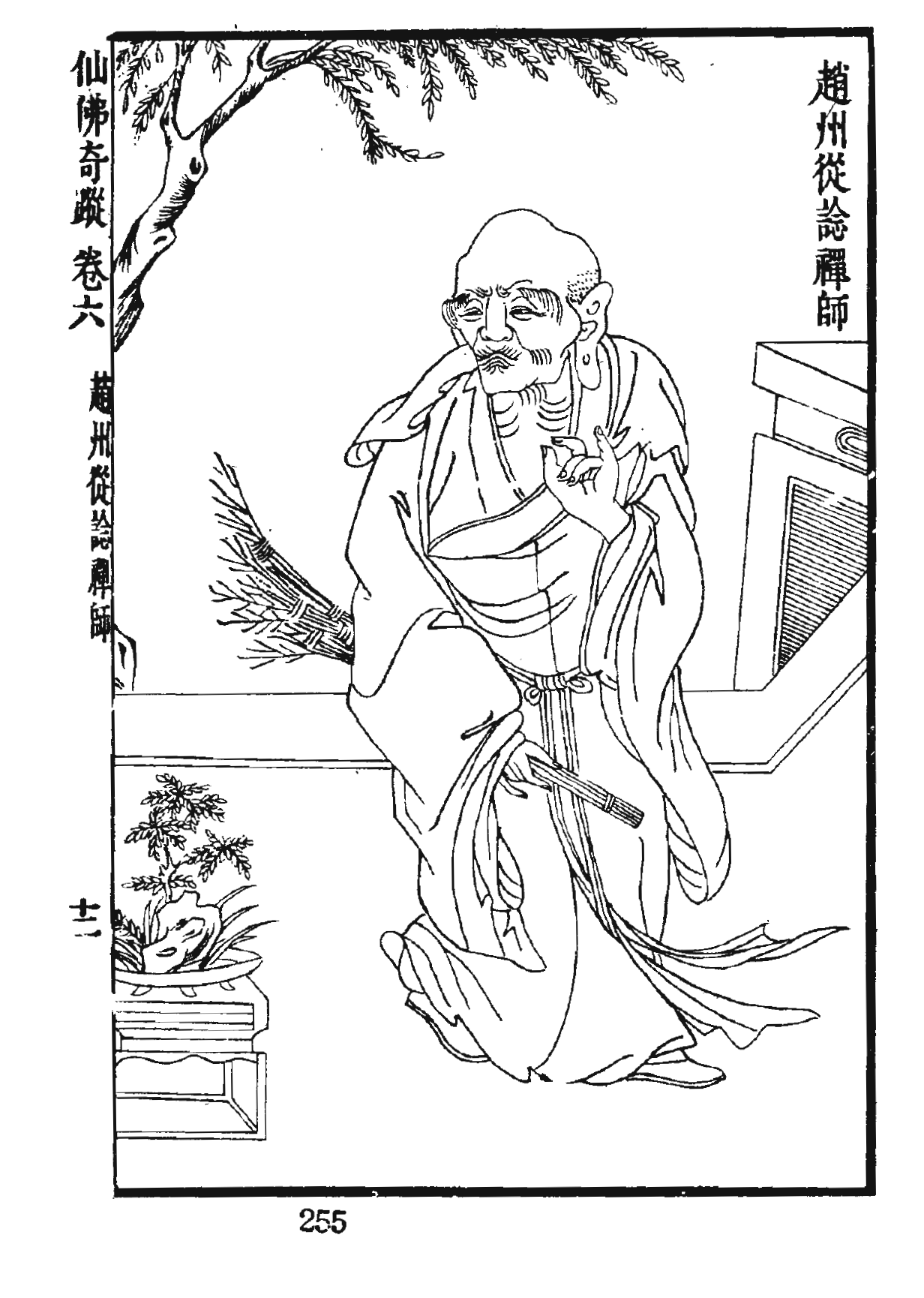
        Later iconographic depiction associated with Zhaozhou, included as historical reception rather than a life portrait
        Zhaozhou Congshen · 仙佛奇蹤
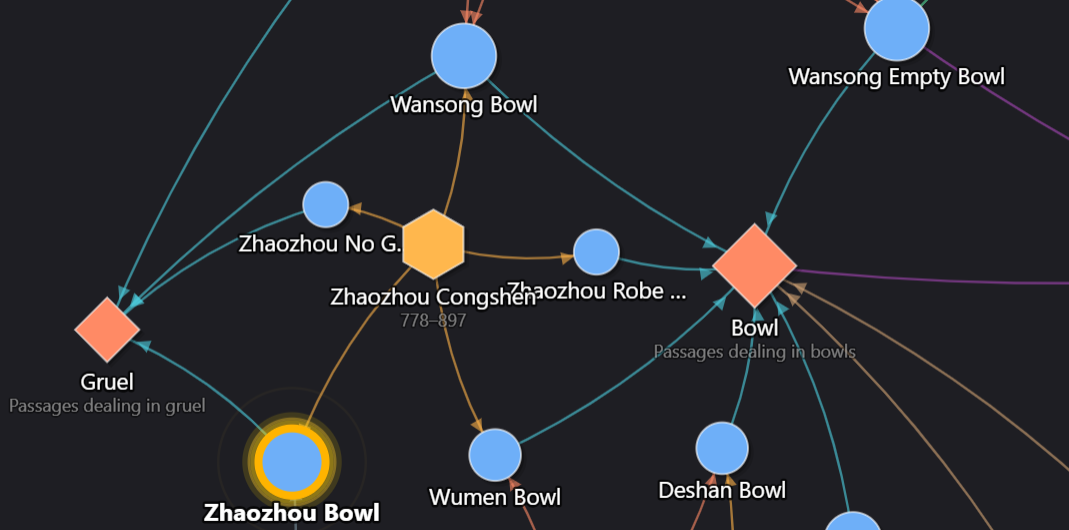
        The graph Open “Zhaozhou Bowl” readzen.pages.dev/#/scholar/Fabulu/Zhaozhou%20Bowl/graph

        English: community translation, machine-assisted.

        Read the storyLook up 洗鉢盂Put it in a graph

        Chinese: 趙州因僧問:「某甲乍入叢林,乞師指示。」州云:「喫粥了也未?」僧云:「喫粥了也。」州云:「洗鉢盂去。」其僧有省。

        Source: Wumenguan, T48n2005, 0293c27–0293c29. The displayed English is a concise workshop rendering of current machine-assisted community material, not a critical translation.

        Image: Zhaozhou Congshen from Hong Zicheng’s Xianfo Qizong, volume 6; public domain.

        Animation: puppet head from the Zhaozhou portrait in Fozu tongxi daoying (woodblock print, 1880; public domain).

        Gateless Barrier case 7 (T48n2005 0293c27–29): a newcomer asks for instruction; Zhaozhou asks whether he has eaten his gruel, hears yes, and says “Go wash your bowl.” The newcomer awakens. Then the three things we did today — read the story, look it up, put it in a graph — and the finished “Zhaozhou Bowl” graph.

        23The desktop graph editor

        Play this slide ↗

        Desktop graph editor

        Draw the
        connection.

        Now live in ReadZen desktop.Switching to the app.
        ReadZen desktop.Free to download from the ReadZen website.
        Reader fallbackGet it at readzen.pages.dev
        Close-up of the ReadZen desktop research graph canvas with connected passage and research nodes
        ReadZen research graph洗鉢盂去 · T48n2005 0293c28
        1. 01
          Add a passagethe bowl story
        2. 02
          Add a term or a masterZhaozhou
        3. 03
          Drag to connectand name the link
        4. 04
          Click a passagejump back to the text
        5. 05
          Sharesend the graph as a link
        Every line on the canvas leads back to a text.

        In ReadZen desktop you drop in a passage (the bowl story), add a term or a master (Zhaozhou), drag to connect them and name the link, click back to the text, and share the graph as a link. Every line on the canvas leads back to a text.

        24Curtain call

        Play this slide ↗

        ReadZen · UZH · 1 October 2026

        Thank you.
        謝謝。

        Questions?

        不識。 “I do not know.” — Bodhidharma

        Starring Bodhidharma · Emperor Wu · Mazu · Nanquan · Zhaozhou · Linji · Deshan · Xiangyan — and the squirrel.

        The end: the curtain opens on a night sky, and every master from the talk takes a bow under fireworks of their own words. Then “Questions?” — Bodhidharma steps forward and answers as he did at the very start: 不識, “I do not know.” Links: readzen.pages.dev and readzen-presentation.pages.dev.

        25Extra time: go digging

        Play this slide ↗

        Time left? · on readzen.pages.dev

        Go digging.

        Pick one, alone or in pairs. Everything you need is on the website.

        1. 1

          狗子還有佛性

          The dog, again

          In the Gateless Barrier, Zhaozhou says 無. The Book of Serenity tells it twice: once 有, once 無. What reason comes with each answer?

          T48n2004 0238b25–b28 ↗
        2. 2

          乾屎橛

          Dry shit-stick

          Yunmen’s answer to “What is the Buddha?” Some of you were called this today. Look it up: who else uses it?

          T48n2005 0295c06 · dictionary ↗
        3. 3

          庭前柏樹子

          The cypress in the courtyard

          The Gateless Barrier gives two lines. Find it in the Recorded Sayings of Zhaozhou. What does the monk say next?

          T48n2005 0297c05 · search ↗
        4. 4

          喫茶去

          Go have some tea

          Over 200 places in the corpus, and no dictionary entry yet. Write one, like 驢年.

          Search 喫茶去 ↗
        5. 5

          洗鉢盂去

          The bowl, elsewhere

          The bowl story turns up in other books. Find one. What changed?

          Search 洗鉢盂去 ↗
        6. 6

          南泉斬貓

          Nanquan cuts the cat

          Zhaozhou answers by putting his sandals on his head. Then open Nanquan in the lineage: who else studied with him?

          Dictionary, then lineage ↗

        If there is time left: six research tasks on readzen.pages.dev, no phone game. The dog again (the Gateless Barrier says 無; the Book of Serenity tells it twice, 有 and 無, T48n2004 0238b25–b28). Yunmen’s 乾屎橛 (T48n2005 0295c06): who else uses it? The cypress in the courtyard 庭前柏樹子 (T48n2005 0297c05): what does the Recorded Sayings of Zhaozhou add? 喫茶去, “go have some tea”: over 200 places, no dictionary entry yet. The bowl story 洗鉢盂去 in other books. 南泉斬貓, Nanquan cuts the cat: then who else studied with Nanquan?